Unit I: Basic Clarity of Thinking and Communication
IN THIS LESSON
Agenda
Collect communication papers–discuss/get examples of “raised” answers
Quill sign up/diagnostic assigned (as quickly as possible)
Parable lectio (15 min)
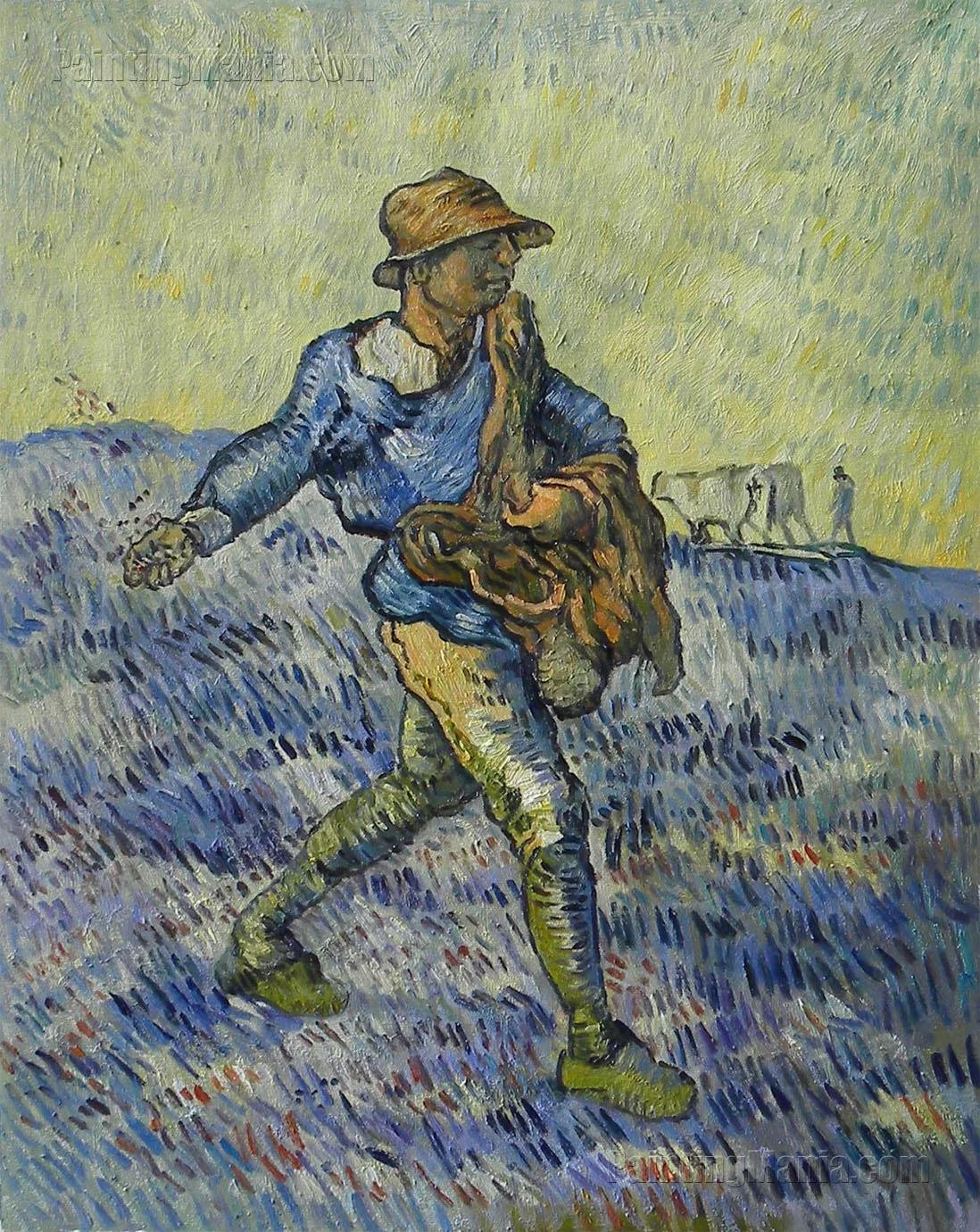
Parable of the Sower” Lesson
**Be sure that all of the desks are in a circle.
Have first slide on the screen (slideshow here)
Distribute handouts so that each student has a copy of the parable. Students should have a pen/pencil out for annotation.
Lectio Divina
*Instruct students to read along as they listen as the parable is read aloud (no pen in hand). Read the parable aloud, slowly.
Then, read the parable aloud, again, but this time have the students mark the word or phrase that stands out to them most. Once finished reading it the 2nd time, have everyone go around the circle and share the word or phrase that they marked.
Let’s unpack the parable more. Please annotate the parable as you watch/listen to the Friar’s insights on the parable. (linked on Slide #2) Students should add annotations as they see fit.
List of questions about the parable/relate to knowing, truth: Handout
Introducing Material Logic: Go over Lesson 1 with them in class and have them write, in-class, the first lesson answers. Collect these at the end of class. (25 min)
Homework
Quill: set up/diagnostic completed (or can be done in Class 5 together)
Summer reading essay
Notes
Quill: Go to Quill.org and set up a teacher account; import your classes and then the system will give you a link/code, or the option to email students with an invite. You first choose the diagnostic test you think best fits the level of your students, which will determine the packets/assignments they need to complete. You can follow/check their progress as they work through the packets.
I normally move more advanced students through diagnostics, so that they are all working at their appropriate levels on Quill. Those students who finish Quill earlier than others, because they have had lots of grammar or have retained a lot from 9th and 1oth grades, can be given more advanced challenges like sentence analysis and construction (rhetorical analysis), and editing challenges to make mediocre prose better (Advanced Grammar Course).
Students have told me that the system has them practice skills over and over, and so at times, I looked at their progress and then gave them a pass on the remaining packets in a certain section.
I only grade their post-diagnostics…so their practice will be reflected on the diagnostic. Corner-cutters figure this out after the first bomb. :0
Material Logic: I think it is important to give a brief overview of the lesson and then highlight some things.
Overview: Teaching logic synthetically: to avoid creating “three separate roads” (grammar, logic, rhetoric) rather than the synthesis of skills that the Trivium is meant to be, and to avoid having either the AP curriculum or the Trivium become a sideline albatross, you must work to synthesize them. One effective way to do this is to create a “theme” for classes as you move through the curriculum. For example, I usually have the following agenda, more or less (as the class gets going):
Words of the Day
Style: grammar or rhetorical devices
Logic
AP Instruction or activities (application of the above)
The “words of the day” I take from the logic text, and I try to weave them into our grammar or style practice, or rhetorical devices, later on. For example “apprehension” can be an early word of the day, and you can ask the students, as you work through parts of speech, to reflect in writing or discussion on how the parts of speech relate to the first act of the mind. Then, work on the logic while highlighting the idea of apprehension. Also, as they do the logic questions, I grade these as writing assignments, pushing them to use the text to become more precise in their articulation. Finally, for the AP section, you can discuss apprehension of the prompt task (the essential “form” of the prompt is the task, etc).
I also continue to reinforce logical concepts and terms as we build our skills in both grammar, thinking, and application, which helps them to write precisely and clearly, and to think more clearly.
Material Logic: this is an introduction to the study of logic and how it relates to language. In this lesson we’ll talk about words…words…words….in our discussion of “communication” and truth, we talked a lot about the power of nonverbal communication. However, in this chapter, you’ll see that to even understand what you are taking in through the senses, you have to think about it...and thoughts are composed of concepts—or words. Highlight: There’s a little section in the chapter about a bird (page 2) that explains this. The class may want to talk about this a little, especially if they really got into “nonverbal communication is the most powerful or truthful form.” It is important to show them how fundamental language is to ALL communication, and that reality itself, along with others, is communicating…but that communication is an interaction that for human beings, always includes concepts (words, thoughts), the materials of language. (LOGOS).
The area of material logic, overall, is concerned with 1) how we know/how we conceptualize/how we define from our conceptions of reality–the world around us and 2) the art of definition (a type of judgement: this is this and not that because…).
Therefore, the opening “three questions to ponder” about communication, power, truth, and lying was the experience they had which should already have shown them how essential conceptualization, perception, and definition are. You can tie these together for them as you move through the material, as it seems right.
I will continue to revisit the idea of communication, power, and truth as I slowly introduce different argumentative and rhetorical terms (dialectic, induction, deduction, demonstration, etc, logos, pathos, ethos, rhetorical situation).
Logic Real World Application (this can help students to connect to real life)